
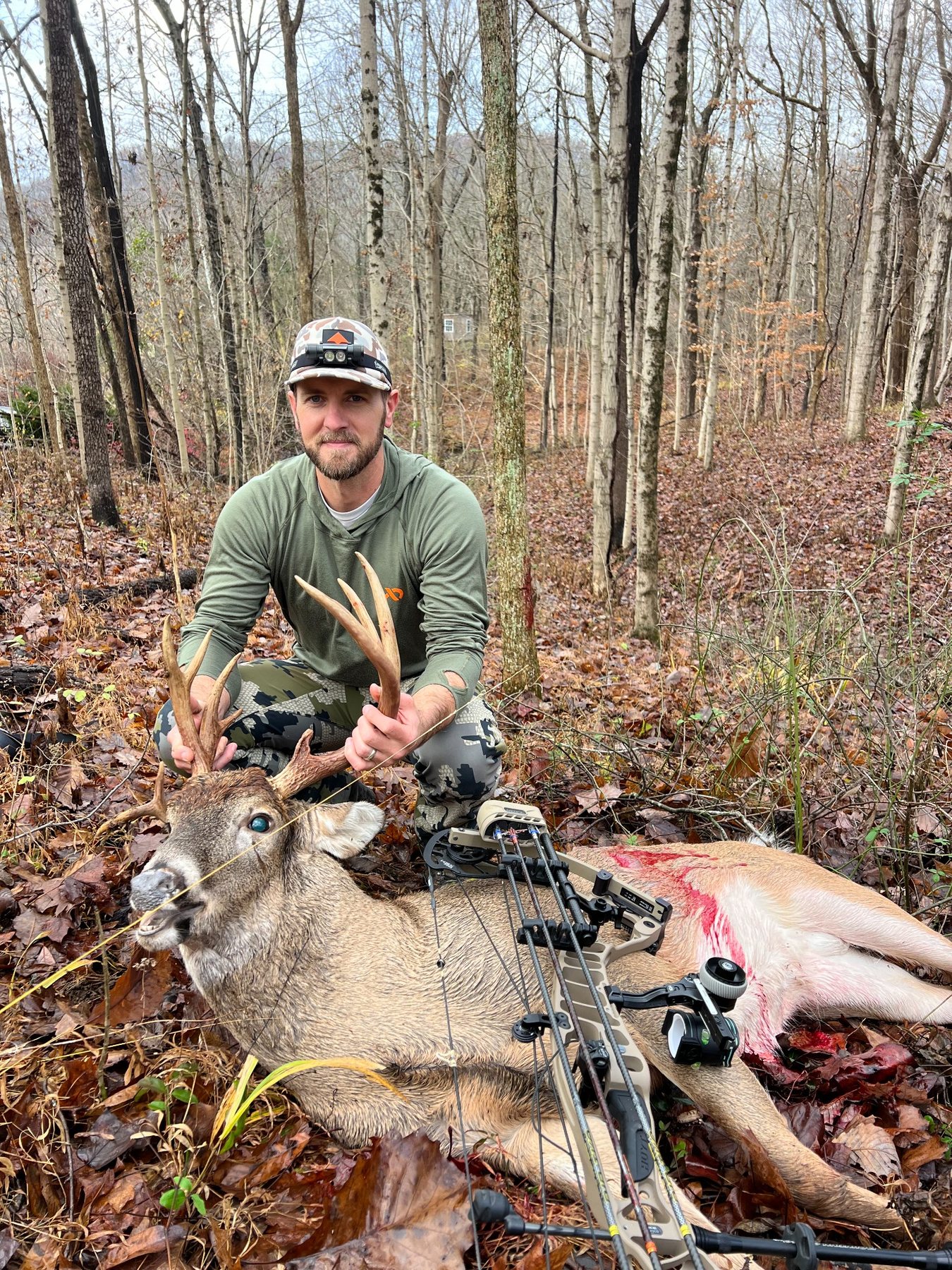
Public-land access is often the difference between seeing deer and seeing empty woods. We treat the route to the stand as part of the hunt, not an afterthought.
Choose the Entry Route First
Before picking a tree, look at how you can reach it without crossing likely bedding or feeding areas. A slightly longer route can be the better route if it protects the core of the area.
Use Wind as a Filter
Wind should eliminate bad access options before you leave home. Consider where your scent travels while walking, where it will travel once you are in the tree and how terrain can alter the airflow.
Think About Thermals
Thermals can change as the morning warms and evening cools. Pay attention to terrain and temperature changes rather than assuming one wind direction will behave identically all day.
Minimize Pressure
Every entry and exit is an event. Avoid unnecessary trips, noisy routes and repeated scouting through the areas you intend to hunt.
Build the Exit Into the Plan
Know where you will go after the hunt. If leaving requires walking through bedding or crossing the primary travel route, reconsider the setup.
Test the Plan
Before committing, walk the route on a non-hunt day when appropriate. Look for obstacles, noise, visibility and places where your scent could travel into the area.
Explore more from Wapitibros
See the gear, hunting stories and current partner deals behind our field-tested approach.
BACK TO FIELD NOTES CURRENT DEALS